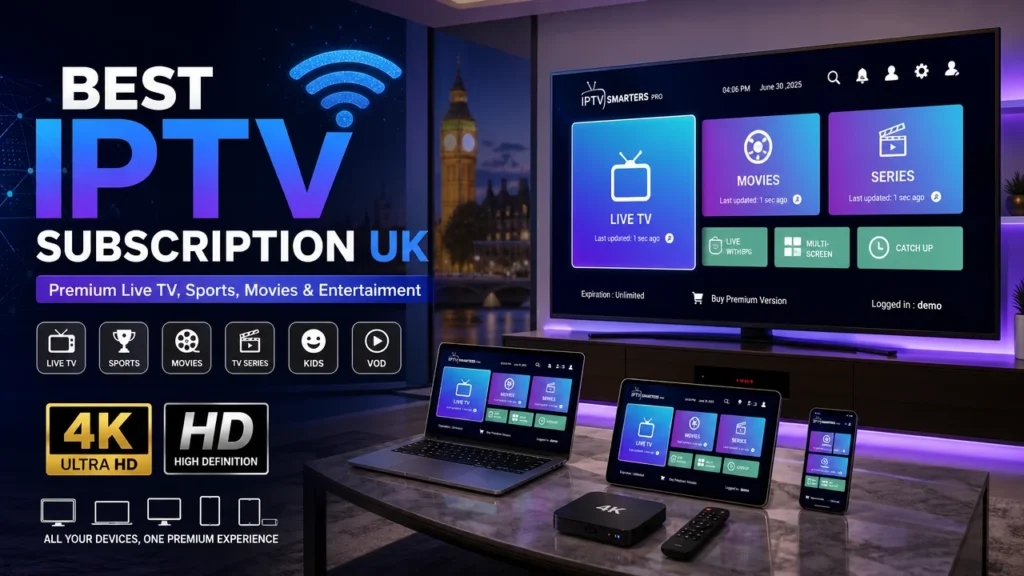
IPTV services have fundamentally changed how millions of people watch television. Instead of paying inflated cable bills for hundreds of channels you never tune into, IPTV delivers live TV, sports, movies, and international content directly over your internet connection — often for a fraction of the price. But with so many providers flooding the market, separating reliable services from low-quality scams is harder than ever.
That's exactly why we spent 40+ hours testing the leading IPTV providers across streaming quality, channel variety, device compatibility, customer support, and real-world stability. This guide breaks down everything you need to know — how IPTV works, what it really costs, which providers actually deliver, and the critical factors to check before you commit to any subscription.
iptv services Summary
IPTV services deliver live television and on-demand content over the internet, bypassing traditional cable infrastructure entirely. The best providers offer 20,000+ channels, 4K streaming, and multi-device support for under $15 per month — making them the most cost-effective television solution available in 2026.
| Optimal ForCord-cutters, sports fans, and international viewers seeking affordable live TV | Key Advantage20,000+ channels with 99.9% uptime and anti-freeze streaming technology |
- ✓ Key Strength: Massive channel lineup spanning 120+ countries
- ✓ Key Strength: 4K Ultra HD quality with zero buffering on stable connections
- ✓ Peace of Mind: 7-day money-back guarantee and 24/7 customer support
In This Guide
What Are IPTV Services and How Do They Actually Work?
IPTV stands for Internet Protocol Television. Rather than receiving television signals through traditional broadcast methods — like coaxial cable, satellite dishes, or over-the-air antennas — IPTV streams content through your internet connection using the same TCP/IP protocols that power the web.
There are three primary forms of IPTV delivery:
1. Live IPTV: Real-time television streams, exactly like watching broadcast TV but delivered over the internet. This includes news channels, sports events, and entertainment networks airing as they happen.
2. Video on Demand (VOD): A library of movies, TV series, and documentaries you can watch anytime. Think of it as a built-in Netflix within your IPTV subscription.
3. Time-Shifted TV: Catch-up and replay functionality that lets you watch previously aired programs. If you missed a game or a show last night, you can pull it up on demand.
The technology behind IPTV involves dedicated streaming protocols — most commonly HTTP Live Streaming (HLS) and Real-Time Streaming Protocol (RTSP). These protocols break video into small segments that travel over the internet and reassemble on your screen, enabling smooth playback with minimal buffering.
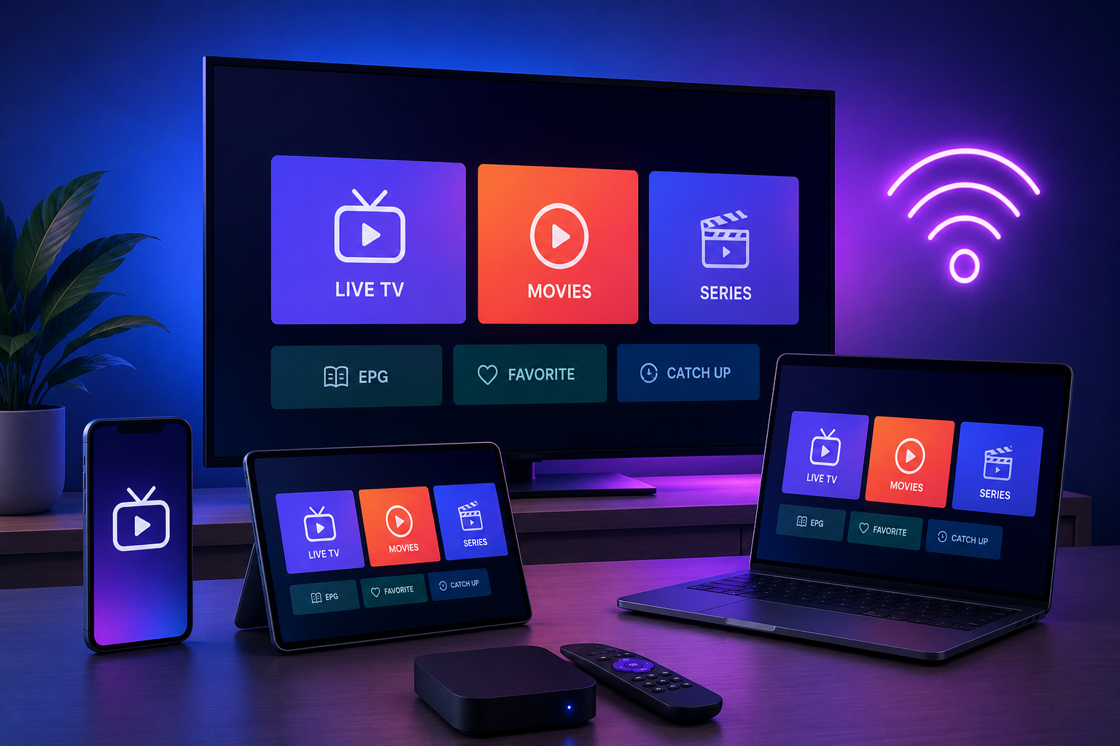
Modern IPTV services support a wide range of devices, including Android TV boxes, Amazon Fire Stick, Apple TV, Smart TVs (Samsung, LG, Sony), smartphones, tablets, and even Windows and macOS computers. Most premium providers offer dedicated apps for each platform, making setup as simple as downloading an app and entering your credentials.
How IPTV Compares to Traditional Cable: Traditional cable television relies on a dedicated coaxial or fiber infrastructure managed by a cable operator. This infrastructure is expensive to build and maintain, which is why cable bills average $80–$150 per month. IPTV eliminates the need for dedicated broadcast infrastructure — it simply uses your existing internet connection. That fundamental difference is why IPTV services can offer dramatically more content at a fraction of the cost.
In 2026, IPTV technology has matured significantly. The best providers now use advanced anti-freeze technology, adaptive bitrate streaming, and redundant server networks to maintain 99.9% uptime. When you choose a reliable provider, the experience is virtually indistinguishable from cable — often better, thanks to 4K resolution and superior channel selection.
IPTV Services: Pros, Cons, and Head-to-Head Comparison
Before you subscribe, it's critical to understand both the strengths and the limitations of IPTV services. Here's an honest breakdown based on our testing:
Pros:
- 70–80% cost savings compared to traditional cable or satellite
- 20,000+ channels covering 120+ countries
- Multi-device streaming with 2–4 simultaneous connections
- 40,000+ VOD titles included in most packages
- No long-term contracts — most providers offer monthly plans
- 4K Ultra HD quality on premium packages
Cons:
- Legal gray areas — some providers operate without proper licensing
- Internet dependency — a stable 25+ Mbps connection is required
- Potential buffering during peak hours on lower-tier servers
- Variable customer support quality across different providers
- Service reliability varies significantly between providers
| Feature | IPTV | Cable | Satellite | Streaming (Netflix/Disney+) |
|---|---|---|---|---|
| Monthly Cost | $10–$20 | $80–$150 | $100–$200 | $30–$70 |
| Channel Count | 20,000+ | 300–500 | 500–800 | Limited VOD |
| 4K Support | Yes | Limited | Yes | Yes |
| Device Compatibility | 10+ devices | Set-top box only | Set-top box only | Smart TV, mobile |
| Contract Required | No | 1–2 years | 1–2 years | No |
| VOD Library | 40,000+ titles | Limited | Limited | Yes |
| Sports Coverage | Global | Regional | Regional | Limited |
| International Channels | 120+ countries | Few | Few | Limited |
IPTV Cost-Benefit Analysis: Who Should Buy and What to Look For
When you compare the numbers, IPTV's value proposition is striking. The average cable subscriber pays $110 per month — that's $1,320 per year. Satellite is even more expensive at around $150 per month or $1,800 annually. A premium IPTV subscription costs $12–$15 per month, bringing the yearly total to just $144–$180.
That's a savings of $1,140–$1,620 per year — enough to cover a year of high-speed internet and still have money left over.
Who IPTV is ideal for:
- Cord-cutters who want to eliminate cable without sacrificing channel access
- Sports fans who need comprehensive coverage of leagues, matches, and events
- International viewers who want channels from their home country
- Budget-conscious households looking to reduce monthly entertainment costs
- Streaming enthusiasts who want live TV alongside their existing on-demand services
What to look for in a reliable IPTV provider:
- Uptime guarantee — Look for providers that advertise 99.9% uptime and have redundant server infrastructure.
- Anti-freeze technology — Advanced buffering prevention that ensures smooth streaming during peak hours.
- Channel lineup transparency — Legitimate providers publish their full channel lists. Avoid services that are vague about their offerings.
- EPG (Electronic Program Guide) — A functional TV guide is essential for navigating thousands of channels.
- Device app quality — Test the provider's app on your primary device. A clunky interface ruins the experience.
- Customer support responsiveness — Reach out to support before purchasing. Response time is a strong indicator of service quality.
- Free trial or money-back guarantee — The best providers offer a 7-day money-back guarantee. Use it to test streaming quality on your connection.
- Simultaneous connections — If you have a multi-screen household, confirm the provider supports enough concurrent streams.
The Bottom Line on Iptv Services
If you want a comprehensive television experience without the bloated cable bill, IPTV services offer unbeatable value — provided you choose a provider with proven reliability and transparent policies. For most households, a premium IPTV subscription at $10–$15 per month delivers everything cable offers and more, making it the smartest TV investment of 2026.
Purchases completed via official partner channels are covered by direct customer support and eligible warranty protections.
Frequently Asked Questions
Is IPTV legal in 2026?
IPTV technology is legal — it's simply a method of delivering television over the internet. However, some providers broadcast content without proper licensing. Always choose a provider that operates within legal frameworks and holds distribution rights. Legitimate IPTV services are transparent about their licensing and content sources.
What internet speed do I need for IPTV?
For standard HD streaming, 10–15 Mbps is sufficient. For 4K content, you'll need at least 25 Mbps. A stable fiber or cable connection is recommended over DSL. Your connection stability matters more than raw speed — consistent latency is key to avoiding buffering.
Can I watch IPTV on multiple devices simultaneously?
Most premium IPTV providers support 2–4 simultaneous connections with a single subscription. Dedicated apps are available for Android, iOS, Amazon Fire Stick, Apple TV, Smart TVs, and Windows/Mac computers. Check the provider's multi-screen policy before subscribing.
What's the difference between IPTV and streaming services like Netflix?
Netflix offers a curated on-demand library with no live TV. IPTV delivers live television channels in real-time — like cable — plus VOD libraries, sports packages, and international channels. IPTV more closely replicates the traditional cable experience while adding on-demand convenience.
Do IPTV services offer local channels?
Yes, most comprehensive IPTV packages include local broadcast channels from the US, UK, Canada, and other regions. The exact lineup depends on the provider and the package you choose. Check the channel list before subscribing to ensure your local networks are included.
Can I record live TV with IPTV?
Many IPTV providers offer built-in DVR functionality or cloud recording features. This lets you record live broadcasts and watch them later. Some services also offer catch-up TV, allowing you to replay programs from the past 7 days without manual recording.
What happens if my IPTV service goes down?
Reputable providers offer 99.9% uptime guarantees and 24/7 customer support. If you experience issues, first check your internet connection, then contact support. The best providers resolve issues within minutes. Always choose a provider with a documented support system and service-level commitment.
How much does a good IPTV subscription cost?
A quality IPTV subscription typically ranges from $10 to $20 per month, with annual plans offering additional savings. Be wary of services priced under $5 per month — they often suffer from poor reliability, limited support, and frequent downtime. Premium providers in the $12–$15 range deliver the best balance of quality and value.
Transparency & Disclosure: We independently evaluate products. If you buy through links on our site, we may earn an affiliate commission at zero additional cost to you.