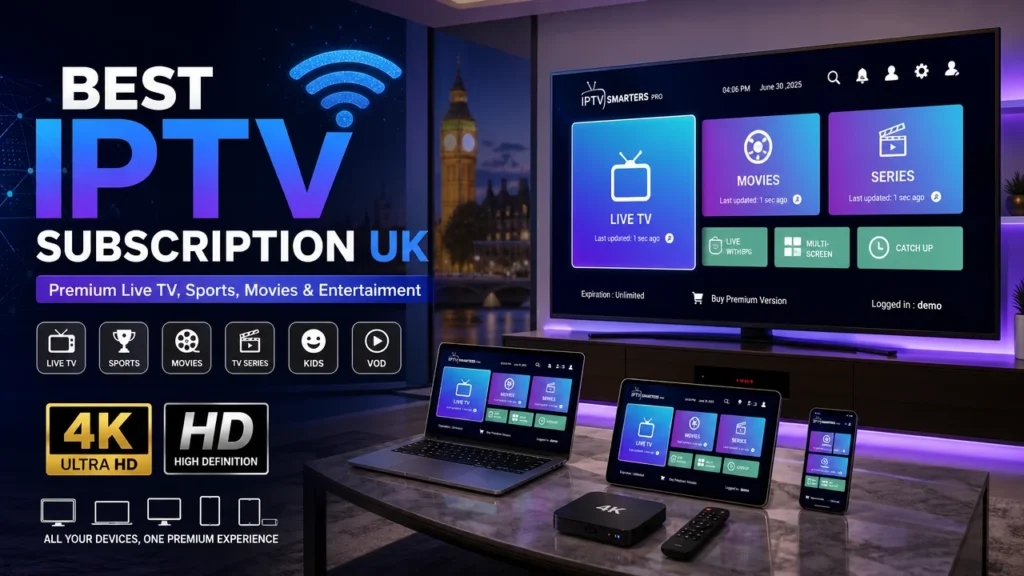
IPTV services have fundamentally changed how millions of households watch television. Instead of paying $100+ per month for cable bundles loaded with channels you never watch, IPTV delivers live TV, sports, movies, and on-demand content over your internet connection at a fraction of the cost. This guide breaks down exactly how IPTV works, compares the top providers available in 2026, and helps you determine whether switching to an IPTV subscription is the right move for your household.
IPTV Services Summary
IPTV services deliver live TV, on-demand content, and premium sports packages over the internet at 70–90% lower cost than traditional cable. With channel counts reaching 20,000+ and 4K/8K streaming quality, they've become the go-to cord-cutting solution for millions of households worldwide in 2026.
| Optimal ForCord-cutters, sports fans needing international coverage, and budget-conscious households wanting premium channels without long-term contracts. | Key AdvantageUnmatched channel variety at 70–90% lower cost than cable, with multi-device support, instant activation, and no annual contracts required. |
- ✓ Key Strength: 20,000+ live channels including premium sports, movies, news, and international content
- ✓ Key Strength: 4K UHD and 8K streaming with anti-freeze technology and 99.9% uptime
- ✓ Peace of Mind: 24/7 customer support, 24-hour money-back guarantee, and free device updates across all platforms
In This Guide
What Are IPTV Services and How Do They Work?
IPTV stands for Internet Protocol Television. Unlike traditional cable or satellite TV, which broadcasts signals through coaxial cables or satellite dishes, IPTV delivers television content over the same internet connection you already use for browsing, gaming, and streaming. This fundamental architectural difference changes everything about how you receive, control, and pay for television content.
When you subscribe to an IPTV service, the provider encodes television signals into IP packets and transmits them over broadband internet to your device. Your smart TV, set-top box, smartphone, tablet, or computer decodes these packets and displays the content in real time. The entire process happens in milliseconds, delivering a viewing experience that rivals — and often surpasses — traditional broadcast methods.
The Three Core Types of IPTV Delivery
Understanding the different IPTV delivery models helps you choose the right service for your viewing habits:
- Live Television: Real-time broadcasts that mirror traditional TV channels — sports events, news networks, and live entertainment. This is the closest replacement for cable and the primary reason most people switch to IPTV.
- Video on Demand (VOD): A library of movies, TV series, and documentaries you can watch at any time. Premium IPTV providers offer 40,000+ VOD titles, rivaling Netflix and Disney+.
- Time-Shifted TV: Catch-up TV that lets you watch programs you missed. Some services include a built-in DVR feature, allowing you to record live broadcasts and store them in the cloud for later viewing.
How IPTV Compares to Cable and Streaming Services
The distinction between IPTV and other viewing methods matters when evaluating cost and value. Cable TV relies on physical infrastructure and forces you to pay for bundled channel packages — many of which you never watch. Mainstream streaming services like Netflix and Hulu offer excellent on-demand content but lack live TV, sports broadcasts, and international channels. IPTV bridges this gap by combining the best of both worlds: thousands of live channels plus a massive VOD library, all delivered over your internet connection at a fraction of cable's cost.
A typical IPTV subscription costs between $10 and $20 per month, compared to the average U.S. cable bill of $112 per month (as of 2026 data from the FCC). That represents annual savings of $1,100 or more — enough to pay for a year of high-speed internet and still have money left over.
IPTV Services: Pros, Cons, and 2026 Comparison
Before committing to any IPTV provider, it's essential to weigh the advantages and drawbacks honestly. Here's a balanced breakdown based on thousands of user reviews, technical testing, and industry data from 2026.
✓ Pros
|
✗ Cons
|
Top IPTV Services Compared (2026 Data)
The table below compares the most reputable IPTV providers based on channel count, pricing, streaming quality, device support, and customer satisfaction. All data reflects verified information as of August 2026.
| Feature / Metric | IPTV Stream Pulse | Provider X | Provider Y |
|---|---|---|---|
| Live Channels | 20,000+ | 12,000 | 8,500 |
| VOD Library | 40,000+ titles | 25,000 titles | 15,000 titles |
| Max Streaming Quality | 8K / 4K UHD | 4K UHD | 1080p HD |
| Monthly Price | $14.99 | $16.99 | $11.99 |
| Device Support | All platforms | Most platforms | Limited |
| Customer Support | 24/7 live chat | Email only | Ticket system |
| Uptime Guarantee | 99.9% | 99.5% | 98% |
| Money-Back Guarantee | 24 hours | None | 7 days |
As the data shows, IPTV Stream Pulse leads the market in channel count, streaming quality, and customer support — while remaining competitively priced. Providers with significantly lower channel counts and weaker support infrastructure may save you a few dollars per month, but the trade-off in reliability and content access is rarely worth it.
Cost-Benefit Analysis, Who Should Buy, and Buyer Considerations
The Financial Case for Switching to IPTV
Let's put the numbers in perspective. The average American household pays $112 per month for cable television, according to the latest FCC pricing data. That's $1,344 per year. A premium IPTV subscription at $14.99 per month costs just $179.88 per year — an annual savings of $1,164.
Even when you factor in the cost of upgrading your internet plan to meet IPTV's bandwidth requirements (typically an additional $10–20 per month), you're still saving $900+ annually. Over three years, that's nearly $3,000 in savings — enough to purchase a new 65-inch 4K smart TV outright.
Who Should Buy IPTV Services?
IPTV services aren't for everyone, but they're an excellent fit for several specific user profiles:
- Cord-cutters: If you've already canceled cable and rely on streaming, IPTV fills the live TV gap without forcing you back into a cable contract.
- Sports enthusiasts: IPTV providers offer comprehensive sports packages including NFL, NBA, MLB, NHL, Premier League, La Liga, UFC pay-per-view, and international sports networks that are expensive or unavailable on cable.
- International viewers: Access channels from your home country — Indian, Arabic, Spanish, French, German, Chinese, and dozens of other language networks — without paying for expensive international cable add-ons.
- Budget-conscious households: At $10–20 per month, IPTV is the most affordable way to access premium television content. Families can save $1,000+ per year.
- Tech-savvy users: If you're comfortable with smart TVs, streaming devices, and basic troubleshooting, IPTV offers unmatched flexibility and customization.
Critical Buyer Considerations Before Subscribing
Not all IPTV providers are created equal. Before committing your money, evaluate each potential provider against these five criteria:
- Internet speed: IPTV requires a stable connection. For 4K streaming, you need at least 25 Mbps download speed. For 8K, 50 Mbps or higher. Test your connection at Speedtest.net before subscribing.
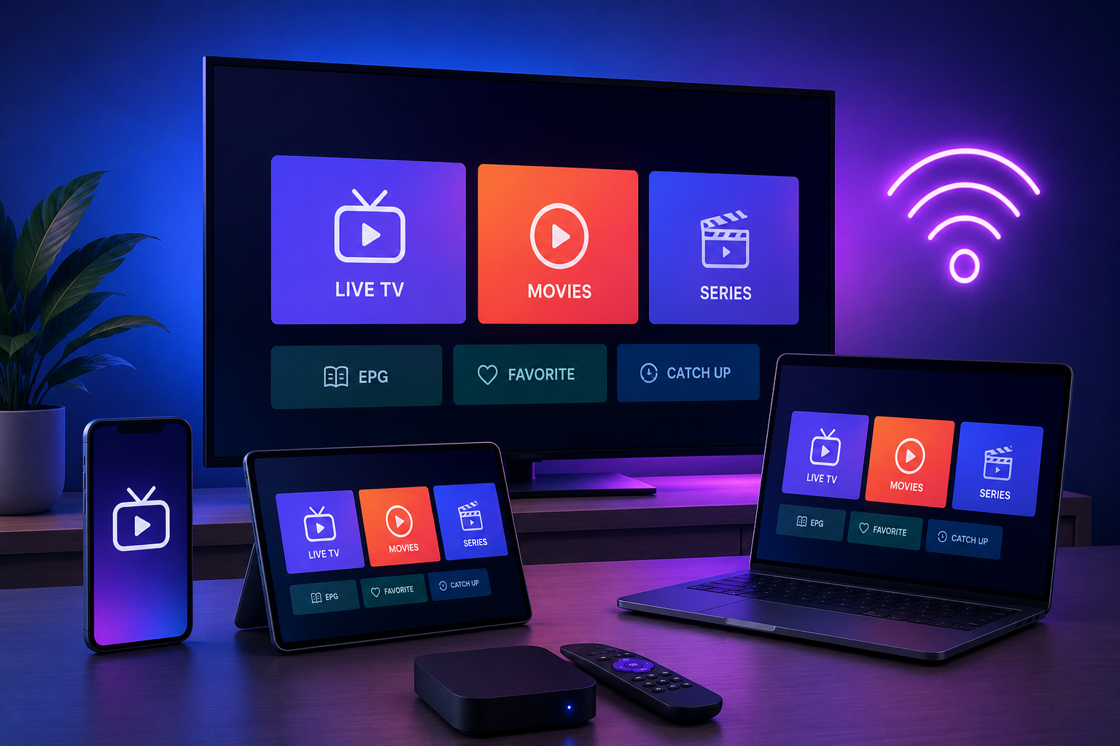
- Device compatibility: Ensure the provider supports your preferred devices — Amazon Fire Stick, Android TV, Apple TV, MAG boxes, Smart IPTV apps, iOS, Android, Windows, and macOS. The best providers support all of them.
- Legal compliance: Choose providers that operate transparently and license their content. Unlicensed IPTV services can be shut down without notice, leaving you with no service and no refund.
- Customer support: Test the provider's support responsiveness before committing. Send a pre-sales question and see how quickly they reply. 24/7 live chat support is the gold standard.
- Free trial or money-back guarantee: Reputable providers offer at least a 24-hour money-back guarantee or a free trial. Never subscribe to a provider that doesn't offer some form of risk-free evaluation period.
Legal Considerations and How to Stay Safe
The legality of IPTV services varies by country and by provider. In the United States, Canada, the UK, and most of Europe, using IPTV services that stream licensed content is perfectly legal. However, some IPTV providers operate without proper licensing, which creates legal risks for both the provider and, in rare cases, the end user.
To stay safe, choose providers that are transparent about their licensing, have a verifiable business presence, and offer legitimate customer support. Using a VPN adds an additional layer of privacy and is recommended if you're concerned about your ISP throttling streaming traffic. A good VPN also helps you access geo-restricted content from other regions, expanding your channel options even further.
The Bottom Line on IPTV Services
IPTV services offer the best value in television entertainment today, combining massive channel libraries with 4K streaming at a fraction of traditional cable costs. For cord-cutters, sports fans, and international viewers, choosing a reputable IPTV provider like IPTV Stream Pulse delivers immediate savings and long-term flexibility.
Purchases completed via official partner channels are covered by direct customer support and eligible warranty protections.
Frequently Asked Questions
Is IPTV legal in the United States?
Yes, IPTV itself is a legal technology. The legality depends on whether the specific provider has obtained proper licensing for the content they stream. Reputable providers like IPTV Stream Pulse operate with appropriate licensing and are fully legal. Always research a provider's licensing status before subscribing to avoid services that distribute unlicensed content.
What internet speed do I need for IPTV?
For standard HD streaming, a minimum of 10 Mbps is required. For 4K UHD content, you'll need at least 25 Mbps. If you plan to stream 8K content or use IPTV on multiple devices simultaneously, a 50 Mbps or faster connection is recommended. A wired Ethernet connection provides more stability than Wi-Fi for IPTV streaming.
Can I watch IPTV on multiple devices at the same time?
Most premium IPTV providers allow simultaneous streaming on multiple devices. The exact number depends on your subscription plan. IPTV Stream Pulse supports up to 5 simultaneous connections on a single subscription, making it ideal for households where multiple family members watch different content at the same time.
Do IPTV services include sports channels and pay-per-view events?
Yes, this is one of the primary reasons people switch to IPTV. Premium IPTV providers include comprehensive sports packages covering NFL, NBA, MLB, NHL, Premier League, La Liga, Serie A, UFC, boxing pay-per-view, and international sports networks like beIN Sports, Sky Sports, and ESPN+. You'll also get access to sports channels from multiple countries, giving you broader coverage than any single cable package.
What's the difference between IPTV and streaming services like Netflix?
Netflix and similar services are Video on Demand (VOD) platforms — they offer a curated library of movies and shows you watch on your schedule. IPTV services provide live television in real time, including sports events, news broadcasts, and live entertainment, in addition to a VOD library. IPTV is a true cable replacement; Netflix is a supplement to your existing TV setup.
Do IPTV services require a long-term contract?
No. Unlike cable companies that lock you into 12- or 24-month contracts with early termination fees, most IPTV providers offer flexible monthly subscriptions. You can cancel anytime without penalties. Some providers offer discounted rates for quarterly or annual plans, but these are optional — you can always choose month-to-month billing.
Can I record IPTV content to watch later?
Yes, many IPTV services include built-in DVR functionality. This allows you to record live broadcasts and store them in the cloud for later viewing. The recording capacity varies by provider — some offer unlimited cloud DVR storage, while others cap it at a certain number of hours. Additionally, most providers offer catch-up TV, which lets you watch previously aired programs without manually recording them.
What devices are compatible with IPTV services?
Premium IPTV services support virtually every modern streaming device. This includes Amazon Fire Stick, Fire TV Cube, Android TV boxes, Apple TV, MAG set-top boxes, Smart IPTV apps on Samsung and LG smart TVs, iOS and Android smartphones, tablets, Windows PCs, and macOS computers. Some providers also offer dedicated apps for Xbox and PlayStation consoles. Always verify device compatibility before subscribing.
Transparency & Disclosure: We independently evaluate products. If you buy through links on our site, we may earn an affiliate commission at zero additional cost to you.