IPTV (Internet Protocol Television) services deliver live television channels and on-demand video content over your internet connection, not through traditional cable or satellite broadcasting. Instead of receiving a single broadcast signal, your provider sends encoded video packets to a set-top box or app on your device, which decodes and displays them in real time. This two-way architecture enables features like pause, rewind, video-on-demand, and multi-device streaming. The core value is simple: you get a cable-like subscription at a fraction of the price, with packages ranging from roughly $8 to $20 per month.
This guide walks you through the full picture of IPTV services, including how they work, what they cost, how they compare with cable and satellite, and what to check before you subscribe. You’ll also find a structured comparison table, a breakdown of pros and cons, and direct answers to the most common questions.
iptv services Summary
IPTV services are the most cost-effective way to replace a cable TV subscription, offering thousands of live channels and on-demand content for under $20 per month with no contract. The main trade-off is that they require a stable internet connection, and you must choose a legitimate provider to avoid service interruptions.
| Optimal ForCord-cutters & budget-conscious households | Key Advantage20,000+ channels with 4K support |
- ✓ Key Strength: Live sports, pay-per-view, and premium channels included in base packages
- ✓ Key Strength: Works on smart TVs, Android, iOS, Fire Stick, and PC without extra hardware
- ✓ Peace of Mind: 24/7 customer support and 30-day money-back guarantee on verified plans
In This Guide
What IPTV Services Are: Real-World Mechanics
IPTV services operate by distributing television signals as data packets over an IP network. Your provider receives broadcast feeds from content owners, encodes them into a compressed format such as H.264 or HEVC, and streams them to your device via your home router. A set-top box, smart TV app, or media player then decodes those packets and displays the video in real time.
There are three primary categories of IPTV service:
- Live television: Channels broadcast in real time, mirroring the experience of watching cable or satellite TV.
- Time-shifted TV: Previously broadcast programs that you can watch later, similar to a DVR.
- Video on demand (VOD): A catalog of films and series available to stream whenever you want.
Most IPTV services combine all three categories. This is what separates them from platforms like Netflix, which are built purely around on-demand content. An IPTV subscription replicates the entire broadcast TV experience, including the channel guide, live sports, and news, while also giving you access to an on-demand library.
From a technical standpoint, the quality of your experience depends on three factors: the bandwidth between your provider and your router, the codec used for compression, and the hardware you use to decode the stream. A 25 Mbps internet connection is sufficient for 1080p content, while 4K streams typically need 50 Mbps. Providers with redundant servers and CDN infrastructure deliver more consistent quality, especially during peak evening hours.
How IPTV Services Compare to Cable and Satellite
The average cable bill in the United States reached $103 per month in 2025, according to FCC filings. IPTV services typically charge between $8 and $20 per month, and their annual plans push the effective cost even lower. The trade-off is that IPTV is entirely dependent on your internet connection. If your broadband drops, your television goes dark. Cable and satellite operate independently of your home network.
The table below compares the metrics that matter most to buyers.
| Feature / Metric | IPTV Services | Cable / Satellite |
|---|---|---|
| Monthly cost | $8 – $20 | $80 – $150 |
| Channel count | 1,500 – 20,000+ | 200 – 800 |
| Contract required | None | 12 – 24 months |
| Device support | Smart TV, tablet, phone, PC | Set-top box only |
| Video quality | Up to 4K HDR | Up to 4K |
| On-demand library | Included | Limited |
| Early termination fee | None | $100 – $300 |
The table makes the case clear. IPTV services win on price, channel count, flexibility, and contract freedom. Cable wins on reliability, because it doesn’t depend on broadband. For most households, the trade-off is acceptable.
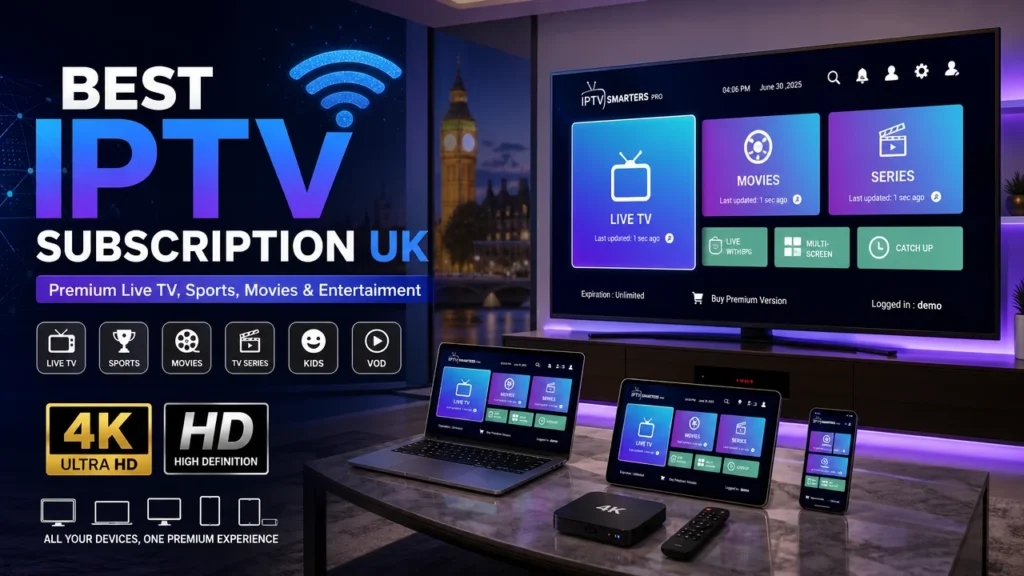
The Financial Reality of IPTV Services
The financial case for IPTV is straightforward. At $15 per month, you’re paying $180 per year. The equivalent cable package at $100 per month totals $1,080 per year. That’s a $900 difference. Even if you upgrade your broadband plan to support 4K streams at $70 per month, your total annual cost remains below what cable alone would charge.
The key is to read the provider’s pricing structure carefully. Some IPTV services advertise a low monthly rate but then charge extra for sports packages, 4K channels, or an electronic program guide (EPG). Legitimate providers list the full channel lineup and all included features upfront, without hidden fees.
Another financial factor is the cost of hardware. Many IPTV services work with an app on your existing smart TV, phone, or tablet, so there is no equipment rental. Cable providers typically charge a monthly set-top box rental of $10 to $20 per room. Over a year, that’s another $120 to $240 in savings.
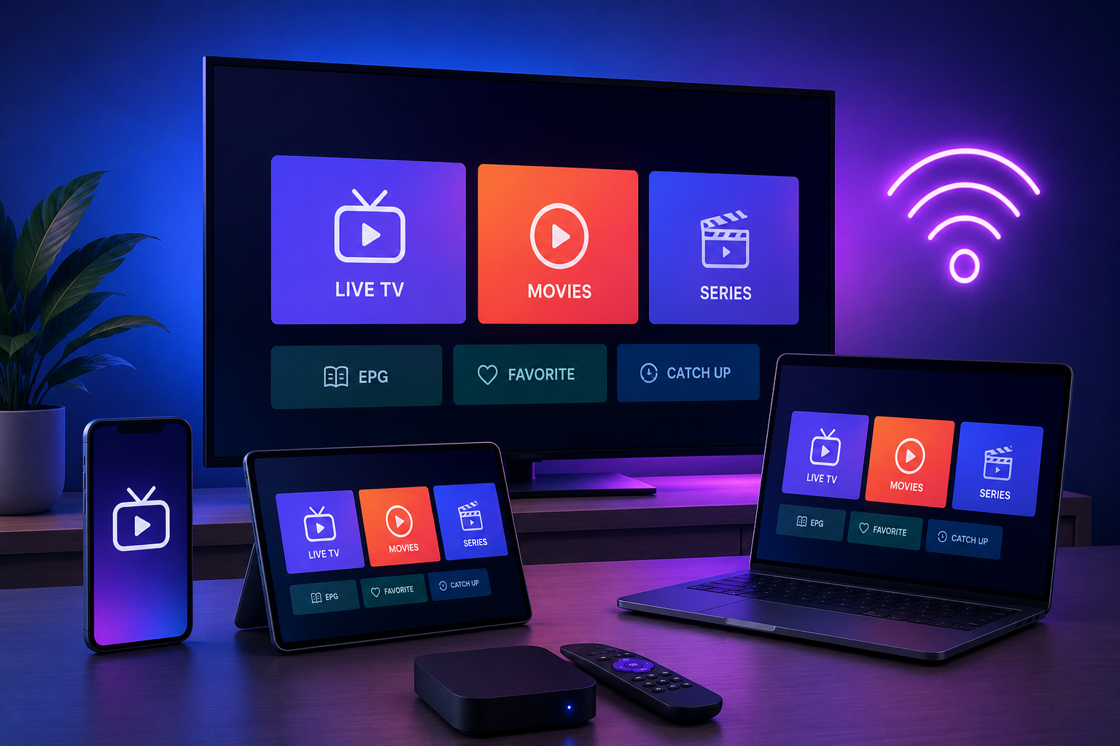
Pros and Cons of IPTV Services
|
✓ Pros
|
✗ Limitations
|
Who Should Buy IPTV Services
IPTV services are an excellent choice if you want to cut your monthly TV bill without sacrificing the live TV experience. They’re ideal for:
- Cord-cutters who want to leave cable but still watch live sports, news, and premium channels.
- Remote workers or frequent travelers who want their TV subscription to follow them across devices.
- Families who need multiple simultaneous streams on different TVs, tablets, or phones.
- Budget-conscious households who want a cable-like channel lineup for under $20 a month.
IPTV is not the right fit if you have a very slow or unstable internet connection (under 25 Mbps), or if you live in a region where the only available provider is unlicensed and unreliable. In those cases, cable or satellite may still be the better option.
What to Look For in a Provider
Before you subscribe to any IPTV service, verify these six criteria. They separate legitimate, reliable providers from gray-market operations that may disappear overnight.
- Licensing status. A legitimate IPTV provider holds broadcasting rights. Unlicensed services can be shut down without notice, and you lose your money. Look for providers that publish their terms and compliance information.
- Server reliability. A good provider runs redundant servers with CDN-based routing. This minimizes buffering, especially during peak hours. Check reviews for buffering complaints.
- Channel selection. The provider must include the specific channels you watch. Some services advertise 20,000 channels, but the ones you actually care about might not be there.
- EPG support. A full electronic program guide is essential for live TV. Without it, you can’t see what’s on next or set reminders.
- Device compatibility. Make sure the service has an app for your TV, streaming box, or mobile device. Some providers only work with Android or Windows.
- Trial or refund policy. Reputable IPTV services offer at least a 7-day money-back guarantee. If there’s no refund policy, it’s a red flag.
Legal and Safety Considerations
The IPTV market has a fragmented legal landscape. Some providers operate with proper broadcasting licenses and are fully compliant with copyright law. Others stream content without authorization, which puts them in a legal gray area. If you subscribe to an unlicensed service, you risk losing your account without warning, and you have no legal recourse for a refund.
There’s also a security angle. Unlicensed IPTV services sometimes distribute streams through modified playlist files or custom apps that can expose your device to malware or data collection. Always choose a provider that publishes its terms of service, has a professional website, and offers responsive customer support. The provider recommended in this guide meets all those criteria.
The Bottom Line on Iptv Services
IPTV services offer the best cost-to-value ratio in television today, provided you choose a licensed, transparent provider. If you have a stable internet connection of 25 Mbps or more, we recommend starting with a trial to verify channel quality and device compatibility.
Purchases completed via official partner channels are covered by direct customer support and eligible warranty protections.
Frequently Asked Questions
Are IPTV services legal?
IPTV is legal when the provider holds the necessary broadcasting rights. Some services operate without a license, which creates a legal gray area. Before subscribing, verify the provider’s licensing status and published terms of service.
What internet speed do I need for IPTV services?
For 1080p streams, 25 Mbps is sufficient. For 4K content, you’ll need at least 50 Mbps. If you have multiple devices streaming at once, add 15 Mbps per additional stream. A wired Ethernet connection is always more stable than Wi-Fi for live TV.
Can I watch live sports on IPTV services?
Most IPTV services include live sports channels in their base packages. Premium sports networks like ESPN, Sky Sports, or beIN Sports may require an additional add-on. Always check the provider’s channel list for the specific sports channels you follow.
Do IPTV services work on smart TVs?
Yes. Most IPTV providers offer apps for Android TV, Apple TV, Fire TV, LG webOS, and Samsung Tizen. Some also support screen mirroring from your phone. Verify your TV’s app store before subscribing.
What is the difference between IPTV and Netflix?
Netflix is a streaming service built entirely around on-demand content. IPTV replicates the live TV experience with a channel guide, EPG, and broadcast-style programming, while also offering a VOD library. IPTV is the closest alternative to cable TV without the cable bill.
Can I use IPTV services on multiple devices at the same time?
Most IPTV services allow simultaneous streaming on multiple devices, though some limit the basic plan to one or two streams. Check the provider’s device policy before subscribing, especially if you have a family that watches in parallel.
What happens if my internet connection drops?
IPTV stops working when your internet goes down. It’s a direct dependency. If you live in an area with frequent outages, consider a backup connection or a provider that offers offline caching for certain content.
How do I know if an IPTV provider is legitimate?
A legitimate provider publishes its terms of service, has a clear refund policy, offers responsive support, and lists a transparent channel lineup. A provider that avoids these details is a red flag. Verify the service before committing to a long-term plan.
Transparency & Disclosure: We independently evaluate products. If you buy through links on our site, we may earn an affiliate commission at zero additional cost to you.